Lindsay Lohan believes she's being denied driving privileges because the paparazzi are constantly on her tail ... so she's asking her lawyer to get a restraining order prohibiting them from chasing her.
As first reported, the L.A. County Probation Department -- along with the DMV -- have given Lindsay the green light to drive again. And Betty Ford was down with it as well.
But sources involved in the decision tell TMZ ... just when Lindsay was supposed the get the keys, Betty Ford decided it was too much of a safety risk to put Lindsay behind the wheel, because the paparazzi were creating an unsafe driving situation.
We're told Lindsay emailed her lawyer this weekend -- with pictures attached showing the paps following her -- asking the attorney to go to court for the restraining order.
Sources say no decision has been reached on whether a restraining order is a viable option. In the meantime, Lindsay is still stuck in park.
November 30, 2010


November 29, 2010
The Royal wedding: Will the paparazzi doom romance?
Commentators wonder if Prince William and Kate Middleton can escape the paparazzi swarm that oppressed his mother, Princess Diana

They'll be targets — if they can't keep the fairy tale alive:Photographers are a lot more ferocious now than in Diana's day, says PR expert Max Clifford, as quoted by CNN. "If you thought it was bad then, just watch." However, "as long as [the couple maintain a] popular and fairy-tale marriage, then the press are going to behave themselves because it will backfire on them."
"Will lawsuit fears keep photographers away from Kate Middleton?"
The Royals are ready to fight: Both the Queen and Prince William are prepared to take legal steps to "draw the line of what's public — and private," says Charlie D'Agata at CBS News. Prince William promised Kate's father that he would protect her from the media, and he "has already made clear he takes a 'zero tolerance' approach to the paparazzi, threatening to take both criminal and civil action against any photographer who steps over the line." The prince blames the paparazzi for his mother's death, and "he's determined his future wife will not have to tolerate the same kind of harassment."
"Queen determined to stop prying photographers"
Who cares? Royals aren't the draw they once were: In Diana's day, she was the primary focus of the paparazzi. Now, celebrities like the Beckhams and Kate Moss are on the same level as the young royals, says Max Cisotti, a paparazzi industry insider, as quoted in the London Evening Standard. "Kate and William are not more valuable than other A-list celebrities."
"Fair game or respect: paparazzi are at odds over pursuing Kate Middleton"
Nicole Richie To Appear In Court Against Paparazzi

"Nicole's attorneys will put on the stand several preschool teachers from Harlow's school that have witnessed this photographer crossing the line trying to get pictures," a source close to the situation says. "Nicole is fiercely protective of her children, and won't tolerate this. Nicole could testify also."
The source adds that Nicole "is very busy planning her wedding to Joel, but she will drop everything to protect their children."
Nicole is seeking to extend a temporary restraining order – or TRO – against the photographer. According to California law, a temporary restraining order lasts for three weeks, but if the TRO is made permanent it will last up to three years.
October 29, 2010
Tequila Wins Restraining Order Against Kidnap Claim Photographer
Reality TV star TILA TEQUILA has won a restraining order against the photographer who accused her of kidnapping his girlfriend.
Garry Sun hit the headlines this week (ends29Oct10) when he alleged the model and four armed men abducted Shyla Jennings from her Texas home, flew her to Los Angeles and threatened to kill her if she alerted the police to her ordeal.
Tequila hit back, insisting the snapper was nothing more than a disgruntled former employee she had fired after he made "sexual advances" towards her.
In a post on her official website, the star, real name Tila Nguyen, wrote, "Garry Sun is a crazed paparazzi who won't leave me alone! I remember calling the police on him finally because after I fired him, he went crazy and threatened to kill me... He's just a crazed paparazzi who had a dangerous fatal attraction with me and is still angry that I fired him."
She has now convinced a judge at Los Angeles Superior Court to order Sun to keep his distance, and she is planning to file a lawsuit against him for "making such crazy allegations about me", reports TMZ.com.
October 19, 2010
NYCLU Settlement Ends Restriction on Photography Outside Federal Courthouses
In settling a lawsuit filed by the New York Civil Liberties Union, the federal government today recognized the public’s right to take photographs and record videos in public spaces outside federal courthouses throughout the nation.
The settlement comes after the NYCLU sued the federal government in April on behalf of a Libertarian activist who was unlawfully arrested by federal officers after exercising his First Amendment right to record digital video outside of a federal courthouse in Lower Manhattan.
“This settlement secures the public’s First Amendment right to use cameras in public spaces without being harassed,” NYCLU Executive Director Donna Lieberman said. “While we understand the need for heightened security near federal buildings, any rule that results in the arrest of people for exercising their First Amendment rights is clearly unconstitutional. We’re pleased the federal government finally recognizes this fact.”
Plaintiff Antonio Musumeci was arrested on Nov. 9, 2009 after using a hand-held camera to record a protestor in a public plaza outside the Daniel Patrick Moynihan Federal Courthouse in Manhattan.
During the arrest, federal officers forced Musumeci to the pavement and confiscated video from his camera. Musumeci, a software developer for an investment bank, was detained for about 20 minutes and issued a ticket for violating a federal regulation. That charge was later dismissed.
On two subsequent occasions, federal officers threatened Musumeci with arrest after trying to record protests at the courthouse.
“The courthouse plaza is public property paid for by taxpayers, and the public should not be prohibited from using video cameras there. Now people now can freely express their First Amendment right there without being harassed and arrested by federal officers,” said Musumeci, a resident of Edgewater, N.J.
In the settlement approved today by a federal judge in Manhattan, the federal government acknowledges that there are no federal laws or regulations that prohibit photography outside federal courthouses. It agreed to provide federal officers written instructions emphasizing the public’s right to photograph and record outside federal courthouses. The settlement has even broader implications, though.
“Not only will this settlement end harassment of photographers outside federal courthouses, it will free people to photograph and film outside of all federal buildings,” said NYCLU Associate Legal Director Christopher Dunn, lead counsel in the case. “The regulation at issue in this case applies to all federal buildings, not only courthouses, so this settlement should extend to photography near all federal buildings nationwide.
The settlement comes after the NYCLU sued the federal government in April on behalf of a Libertarian activist who was unlawfully arrested by federal officers after exercising his First Amendment right to record digital video outside of a federal courthouse in Lower Manhattan.
“This settlement secures the public’s First Amendment right to use cameras in public spaces without being harassed,” NYCLU Executive Director Donna Lieberman said. “While we understand the need for heightened security near federal buildings, any rule that results in the arrest of people for exercising their First Amendment rights is clearly unconstitutional. We’re pleased the federal government finally recognizes this fact.”
Plaintiff Antonio Musumeci was arrested on Nov. 9, 2009 after using a hand-held camera to record a protestor in a public plaza outside the Daniel Patrick Moynihan Federal Courthouse in Manhattan.
During the arrest, federal officers forced Musumeci to the pavement and confiscated video from his camera. Musumeci, a software developer for an investment bank, was detained for about 20 minutes and issued a ticket for violating a federal regulation. That charge was later dismissed.
On two subsequent occasions, federal officers threatened Musumeci with arrest after trying to record protests at the courthouse.
“The courthouse plaza is public property paid for by taxpayers, and the public should not be prohibited from using video cameras there. Now people now can freely express their First Amendment right there without being harassed and arrested by federal officers,” said Musumeci, a resident of Edgewater, N.J.
In the settlement approved today by a federal judge in Manhattan, the federal government acknowledges that there are no federal laws or regulations that prohibit photography outside federal courthouses. It agreed to provide federal officers written instructions emphasizing the public’s right to photograph and record outside federal courthouses. The settlement has even broader implications, though.
“Not only will this settlement end harassment of photographers outside federal courthouses, it will free people to photograph and film outside of all federal buildings,” said NYCLU Associate Legal Director Christopher Dunn, lead counsel in the case. “The regulation at issue in this case applies to all federal buildings, not only courthouses, so this settlement should extend to photography near all federal buildings nationwide.
October 18, 2010
Mike Tyson Sued for $25 Million by Paparazzi Photographer
 A paparazzi photographer filed a $25 million lawsuit against Mike Tyson on Monday stemming from a scuffle with the boxer at LAX airport last year, RadarOnline.com reports. The incident took place on November 11, 2009.
The photographer, Antonia Echevarria, filed his lawsuit at Los Angeles Superior Court. He claims he sustained several injuries and that the boxer told him, "I will kill you." Echevarria alleges Tyson went after him at LAX which resulted in injuries to his face, brain, spine, neck and other parts of his body.
Tyson was traveling through LAX on his way to Las Vegas with his wife, mother-in-law, assistant and 10-month-old baby daughter when the incident occurred.
At the time of the fight, Tyson and Echevarria placed each other under citizen's arrest and made complaints of misdemeanor battery. Tyson was taken into custody while Echevarria went to a local hospital for treatment of a minor cut on his forehead.
The ex-boxer's attorney, Shawn Chapman Holley, released a statement saying Tyson was aggressively followed by Echevarria who bumped into the stroller of Tyson's baby and disobeyed orders by airport personnel to leave the boxer alone.
"Mr. Tyson and his family were without security and attempting to make a connecting flight when they were aggressively approached by a paparazzo intent on provoking and harassing them. The paparazzo repeatedly refused to comply with the orders and directives of airport personnel to leave the family alone and continued to aggressively pursue the Tyson family--at one point colliding with the baby's stroller," part of Holley's statement said.
"Mr. Tyson remains confident that this matter will be appropriately addressed as the witnesses are interviewed and the facts borne out," she concluded.
October 16, 2010
LaBeouf throws coffee on paparazzi
 Adding another tale to his run-ins with the paparazzi, Shia LaBeouf threw a coffee at a photographer in Washington, D.C. The star continuously comes across some hardships when dealing with the paparazzi. He was caught on tape snatching a photog's camera equipment in June and last year he was snapped showing the paps everyone's favourite finger.
 In the latest incident, LaBeouf, on a break from filming Transformers 3 in Washington D.C., was reading a book at an outdoor café Tuesday when he apparently decided to teach one prying paparazzo a lesson.
Donned in jeans, a red t-shirt and black sunglasses, the Wall Street: Money Never Sleeps star packed up his things, picked up his cup and briskly walked towards an older, male photographer, who started to run, reports the New York Daily News.
However, the young star ran fast enough to getting close to douse the back of the guy's shirt following it with stiff high-tailing him down the street.
October 13, 2010
Miley Cyrus' Fight With Paparazzi

The singer/actress had just had breakfast with her mother Tish and sister Noah at a restaurant in Toluca Lake when she became annoyed by the filmmaker's presence and approached her to turn off the camcorder.
In photographs obtained by WENN, a clearly-distressed Cyrus can be seen walking up to the female and having a heated conversation with her, before the videographer agrees to stop filming.
Nicole Richie Lashes Out At ‘Creepy, Repulsive’ Paparazzi
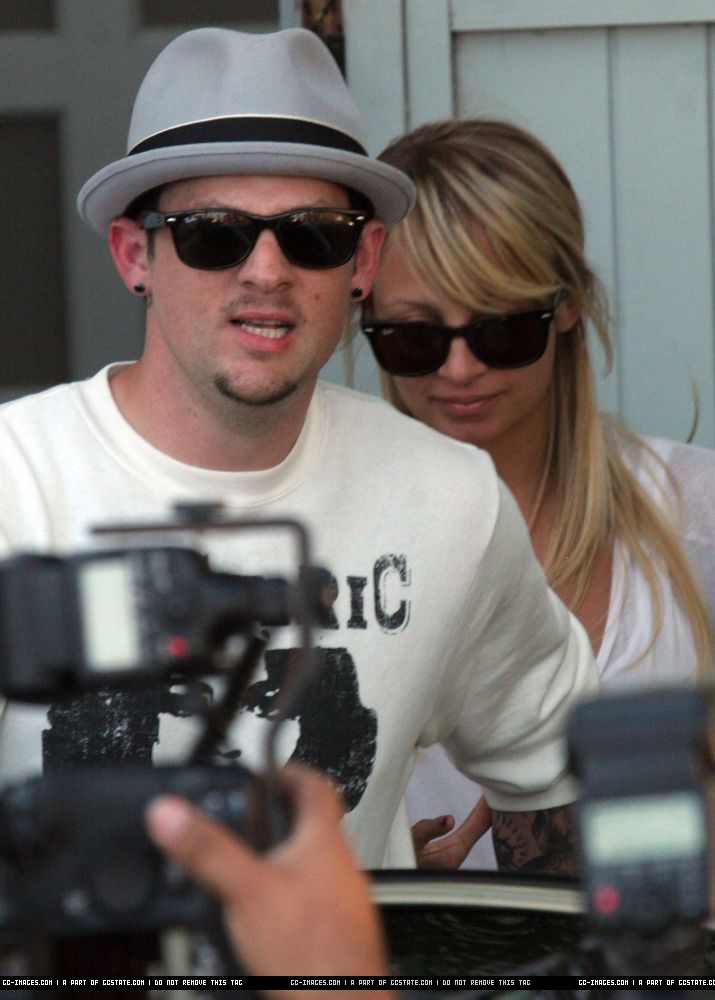
Richie – who has two young kids with fiance Joel Madden – has blasted the agency for publishing a video taken outside her daughter Harlow’s school as Madden dropped her off.
“THANK YOU so much for posting the video of your employees sitting outside of my daughter’s school, because now the entire world can see how creepy and disgusting you are,” Richie wrote on her official blog.
“You do not get to spend 200 dollars on a camera, and think that gives you a free pass to shadow my child. These are strangers, grown men, stalking young children. You think that’s ok?”
The video clip published by X17 showed Madden approaching the cameramen with his own camera, warning them, “You guys better hope you’re alright sitting outside of a school, [because] I’m gonna have all your tags run and everything.”
Richie added: “Here’s a better visual: Pulling up to school and seeing grown men slouched in black windowed cars outside of a preschool, all day. I’m not even there, so you cannot say you are following me as you always do. You are stalking the children. Now how do you feel?
“I PROMISE YOU that I am going to do a background check on each and every person that I see there. For the safety of my children and others. Because the last time I did a check on your staff, I found they had no license. Remember that day? The day that ended with a car accident and me in a hospital?” she wrote.
“These are young children and you should know better. X17, you are irresponsible and repulsive. Consider this a warning.
“YOU SHOULD BE ASHAMED OF YOURSELVES. These are young children and you should know better. X17, you are irresponsible and repulsive. Consider this a warning. Nicole Richie.”
There’s been no comment from X17, but it looks like they’ve yanked the video in question from their website.
October 8, 2010
Russell Brand off the hook for defending Katy Perry from paparazzi

The ‘Tempest’ star was arrested in Los Angeles airport recently for attacking a member of the paparazzi who allegedly tried to take a picture up his fiancé’s skirt.
But it seems the arrest won’t get in the way of the couple’s Indian wedding plans as the 35-year-old will reportedly be let off the hook, according to E! Online.
Although he will only be let off if he and the photographer involved attend a hearing to be told they are officially free and receive a lecture from a judge in the letter of law.
Los Angeles City Attorney’s Office spokesman Frank Mateljan told the entertainment site: “This is the only action as of now. Based on the info, it has been determined that this is the most appropriate action at this time.”
September 17, 2010
Russell Brand Arrested After Alleged Photographer Attack
Paparazzo places actor under citizen's arrest at Los Angeles airport.

Airport police were called to the scene after a "report of a battery involving a celebrity and a commercial photographer," and the alleged victim made a "private person's arrest," according to a police statement. Brand was then interviewed by airport police and taken into custody for suspected battery, Us Weekly reports. He and fiancée Katy Perry did not board their scheduled flight to Las Vegas. The star will be booked at the LAPD Pacific division, a spokesperson told the magazine.
At press time, Brand's camp had yet to issue a statement on the matter.
Brand had been arrested 11 times before Friday's incident, including for public nudity at anti-globalization protests in 2001. In his best-selling memoir, "My Booky Wook: A Memoir of Sex, Drugs and Stand-Up," Brand recounted a slew of sordid tales, including his addiction to sex and heroin. However, in all his prior indiscretions — and there are many — Brand has not been known to act out with any sort of physical violence.
Adam Lambert Gets into Brawl with the Paparazzi

Judging by the photos that have surfaced online, Adam was out at the beach, planning to have nice day all for himself.
Somehow, the paps managed to track him down, even if he was in disguise, decked in shorts, a tank top, oversized shades and a huge straw hat.
In fact, the only thing that could have given him away for the glam rocker fans know on stage and in magazines was the fact that he had a mani-pedi in black polish.
As they started taking his picture and provoking him, as Adam himself says on Twitter, he lost his temper and got into a minor scuffle with one of the photographers.
While some pictures show that Adam grabbed the guy – either in an attempt to take his camera or to force him to leave – they don’t say who won, that is, if he managed to get away from the unwanted attention.
In the aftermath of the minor incident, Adam took to his Twitter to explain what had happened – and to point out that this kind of intrusion in his personal space is simply not ok.
“Eeew paparazzi killed my peaceful afternoon on the beach! #howisthisok?” Adam asks in his first tweet. He then goes on to explain what happened.
“They’re real good at provoking, but there ain’t any pics or video of the b.s. they spew out... Haha well... I lost my temper for a sec but wow it felt great lol MIAMI!!!” the singer further says.
Then, after seeing the pictures the photographers managed to snap of him, he tweets again to say they’re “hilarious” and to jokingly apologize for the unglamorous straw hat.
“Hahha the photos are hilarious !! Lol please everyone forgive me for that hat. - I was attempting a disguise- clearly failed. Hahah,” Adam notes on the same note.
JustJared says the incident took place on September 16, on South Beach, Fla., but doesn’t mention who started it or how it ended. Neither does it say whether the paparazzo in question is thinking of pressing charges, as they usually do in such cases.
September 14, 2010
Photog turns tables on Gibson
Embattled Mel Gibson had an odd encounter with the paparazzi in Los Angeles on Monday, as he attempted to film a snapper in the back of a car on his camera phone.
 A smiling Gibson stepped out of his Mercedes after spotting a paparazzo on his tail, and walked back up the street to confront the photographer filming all the way.
But he wasn't expecting the barrage of pertinent questions, which was hurled at him as the two men filmed each other.
In the footage, which debuted on new U.S. show Access Hollywood Live on Tuesday, the actor/director asked the snapper to wind his window down so he could get a good shot of him on his phone, and asked, "What's the matter, got nothing better to do?"
The photographer obliged and decided to use the opportunity to quiz Gibson about his summer legal woes with ex-girlfriend Oksana Grigorieva, who accused the Braveheart star of lashing out at her in a fight.
The snapper asked, "I just wondered if you really hit Oksana," and then added, "Do you think you'll ever make a movie in Hollywood again?"
The paparazzo continued, calling out Gibson for remarks he has allegedly made against Jews, blacks, Latinos and homosexuals, adding, "Do you ever think you'll ever get anybody of any race or any creed or sexual orientation ever to work for you for free from all the different colleges you asked for free interns from?"
The smile never slipped from cool Gibson's face as he fixed his camera phone on the snapper, and the actor responded by stating, "You got a lot of dialogue, don't you."
The snapper asked, "Do you have anything to say for yourself?", prompting Gibson to retort, "Not to you, I just wanted to film you... Thanks for following us around."
And when the snapper revealed he was a card-carrying member of the Screen Actors Guild, the Aussie actor cracked, "Wanna job? I guess you need one."
Before walking away, the movie star added one final salvo, asking, "What's it like sniffing other people's laundry?"
But the snapper got the last word in, shouting after Gibson, "Hey, do you think I can have my money back for all the tickets I had to pay for those movies? I'm filing a class action lawsuit on behalf of the whole world."
 A smiling Gibson stepped out of his Mercedes after spotting a paparazzo on his tail, and walked back up the street to confront the photographer filming all the way.
But he wasn't expecting the barrage of pertinent questions, which was hurled at him as the two men filmed each other.
In the footage, which debuted on new U.S. show Access Hollywood Live on Tuesday, the actor/director asked the snapper to wind his window down so he could get a good shot of him on his phone, and asked, "What's the matter, got nothing better to do?"
The photographer obliged and decided to use the opportunity to quiz Gibson about his summer legal woes with ex-girlfriend Oksana Grigorieva, who accused the Braveheart star of lashing out at her in a fight.
The snapper asked, "I just wondered if you really hit Oksana," and then added, "Do you think you'll ever make a movie in Hollywood again?"
The paparazzo continued, calling out Gibson for remarks he has allegedly made against Jews, blacks, Latinos and homosexuals, adding, "Do you ever think you'll ever get anybody of any race or any creed or sexual orientation ever to work for you for free from all the different colleges you asked for free interns from?"
The smile never slipped from cool Gibson's face as he fixed his camera phone on the snapper, and the actor responded by stating, "You got a lot of dialogue, don't you."
The snapper asked, "Do you have anything to say for yourself?", prompting Gibson to retort, "Not to you, I just wanted to film you... Thanks for following us around."
And when the snapper revealed he was a card-carrying member of the Screen Actors Guild, the Aussie actor cracked, "Wanna job? I guess you need one."
Before walking away, the movie star added one final salvo, asking, "What's it like sniffing other people's laundry?"
But the snapper got the last word in, shouting after Gibson, "Hey, do you think I can have my money back for all the tickets I had to pay for those movies? I'm filing a class action lawsuit on behalf of the whole world."
September 13, 2010
Photographers Rights- Photography in Public Places
1. You can make a photograph of anything and anyone on any public property, except where a specific law prohibits it.
i.e. streets, sidewalks, town squares, parks, government buildings open to the public, and public libraries.
2. You may shoot on private property if it is open to the public, but you are obligated to stop if the owner requests it.
i.e. malls, retail stores, restaurants, banks, and office building lobbies.
3. Private property owners can prevent photography ON their property, but not photography OF their property from a public location.
4. Anyone can be photographed without concent when they are in a public place unless there is a reasonable expectation of privacy.
i.e. private homes, restrooms, dressing rooms, medical facilities, and phone booths.
5. Despite misconceptions, the following subjects are almost always permissible:
* accidents, fire scenes, criminal activities
* children, celebrities, law enforcement officers
* bridges, infrastructure, transportation facilities
* residential, commercial, and industrial buildings
6. Security is rarely an acceptable reason for restricting photography. Photographing from a public place cannot infringe on trade secrets, nor is it terrorist activity.
7. Private parties cannot detain you against your will unless a serious crime was committed in their presence. Those that do so may be subject to criminal and civil charges.
8. It is a crime for someone to threaten injury, detention, confiscation, or arrest because you are making photographs.
9. You are not obligated to provide your identity or reason for photographing unless questioned by a law enforcement officer and state law requires it.
10. Private parties have no right to confiscate your equipment without a court order. Even law enforcement officers must obtain one unless making an arrest.
When confronted, threatened with detention or the confiscation of equipment, ask the following questions:
* What is your name?
* What is the name of your employer?
* May I leave? If not, what is the legal basis of my detention?
* If equipment is being demanded, what is the legal basis for the confiscation?
http://en.wikipedia.org/wiki/Public_place#Restrictions_on_state_action_in_public_spaces_in_the_United_States http://en.wikipedia.org/wiki/Photography_and_the_law
http://www.flickr.com/groups/nomorefreephotos/discuss/72157604655395007/ http://www.krages.com/bpkphoto.htm
http://www.usatoday.com/tech/columnist/andrewkantor/2006-08-11-photography-rights_x.htm
i.e. streets, sidewalks, town squares, parks, government buildings open to the public, and public libraries.
2. You may shoot on private property if it is open to the public, but you are obligated to stop if the owner requests it.
i.e. malls, retail stores, restaurants, banks, and office building lobbies.
3. Private property owners can prevent photography ON their property, but not photography OF their property from a public location.
4. Anyone can be photographed without concent when they are in a public place unless there is a reasonable expectation of privacy.
i.e. private homes, restrooms, dressing rooms, medical facilities, and phone booths.
5. Despite misconceptions, the following subjects are almost always permissible:
* accidents, fire scenes, criminal activities
* children, celebrities, law enforcement officers
* bridges, infrastructure, transportation facilities
* residential, commercial, and industrial buildings
6. Security is rarely an acceptable reason for restricting photography. Photographing from a public place cannot infringe on trade secrets, nor is it terrorist activity.
7. Private parties cannot detain you against your will unless a serious crime was committed in their presence. Those that do so may be subject to criminal and civil charges.
8. It is a crime for someone to threaten injury, detention, confiscation, or arrest because you are making photographs.
9. You are not obligated to provide your identity or reason for photographing unless questioned by a law enforcement officer and state law requires it.
10. Private parties have no right to confiscate your equipment without a court order. Even law enforcement officers must obtain one unless making an arrest.
No one can force you to delete photos you have made.
When confronted, threatened with detention or the confiscation of equipment, ask the following questions:
* What is your name?
* What is the name of your employer?
* May I leave? If not, what is the legal basis of my detention?
* If equipment is being demanded, what is the legal basis for the confiscation?
http://en.wikipedia.org/wiki/Public_place#Restrictions_on_state_action_in_public_spaces_in_the_United_States http://en.wikipedia.org/wiki/Photography_and_the_law
http://www.flickr.com/groups/nomorefreephotos/discuss/72157604655395007/ http://www.krages.com/bpkphoto.htm
http://www.usatoday.com/tech/columnist/andrewkantor/2006-08-11-photography-rights_x.htm
August 31, 2010
Calif. Assembly OKs bill to send reckless paparazzi to jail
Photogs who break traffic laws to snap celebs face a year in prison and up to a $5,000 fine
 The California Assembly overwhelmingly approved a bill Tuesday that will impose harsh penalties on paparazzi who drive recklessly to get pictures of celebrities.
 Tuesday is the 13th anniversary of the death of Princess Diana, whose death 1997 death in Paris was widely attributed to a high speed chase between a car ferrying the princess and photographers.
The bill originated in and passed the Assembly in June, then was modified by the Senate. It passed Tuesday's Assembly reconfirmation vote 43-13.
It now heads to Gov. Schwarzenegger for a signature. Boosters of the bill speculated that the governor would sign the act into law, noting that he and his wife were themselves driven off the road by paparazzi in 1997.
Various media organizations and the California Newspaper Publishers Association have protested the bill, saying that it criminalizes normal news-gathering practices.
But the bill's proponents, who included Jennifer Aniston and Reese Witherspoon, countered that the tougher measures protected not just celebrities but their children and anyone caught in the crossfire during high-speed chases.
"We feel this new law will improve public safety in general and hopefully prevent anyone else from getting hurt,” Sean Burke, founder and CEO of the Paparazzi Reform Initiative, said in a statement.
California first passed anti-paparazzi legislation in 1998, a year after Diana's death. The legislature amended that law in 2005 and again in 2009.
Tuesday's vote occurs on the anniversary of Princess Diana's death.
August 30, 2010
Toronto Film Fest enacts rules for paparazzi
Reservations will be required for red carpet access
That's the new red carpet rule for paparazzi at the Toronto International Film Festival, where media outlets this September will be required to RSVP before being assigned nightly vantage points to snap the stars.
Jettisoning the old lottery system and red carpet jostling, Toronto will see celebrity camera crews and photographers each morning reserve by email the films they want to cover that afternoon and evening.
Paparazzi will then receive an email confirming whether or not they were granted a spot at their desired red carpet.
TIFF organizers are determined to make their new rules for snappers stick.
"Red carpet assignments will be made for each and every carpet -- media outlets will not retain the same spot on every carpet, on every night or at every venue," the festival said in its new red carpet protocol released on the weekend.
Organizers will not take reservations by phone, only email, and insist they will assign spots on the red carpet according to a film's audience, reach and geography, among other criteria.
Establishing etiquette among paparazzo in Toronto comes as fest organizers have extended red carpets outside a host of festival venues, and charged cinema-goers extra for the privilege of seeing their favorite stars strut into theaters.
July 28, 2010
Photog Killed as Wedding Couple Poses With Guns
 |
One of them turned out to be loaded!
A wedding photographer in Italy who convinced the couple to pose with guns got shot to death when one went off. The bride's parents, who provided the weapons, face charges of negligence for not making sure they were unloaded, reports the Daily Mirror. The 45-year-old victim was filling in for the regular photographer.
"From what we have been able to establish, the photographer had asked the parents of the bride and groom if they had any guns to use as props in a picture and one went off hitting him in the head killing him," said a police spokesman.
Read the rest of the story HERE.
July 26, 2010
Freedom of photography: Police, security often clamp down despite public right
By Annys Shin
Washington Post Staff Writer
A few weeks ago, on his way to work, Matt Urick stopped to snap a few pictures of the U.S. Department of Housing and Urban Development's headquarters. He thought the building was ugly but might make for an interesting photo. The uniformed officer who ran up to him didn't agree. He told Urick he was not allowed to photograph federal buildings.
Urick wanted to tell the guard that there are pictures of the building on HUD's Web site, that every angle of the building is visible in street views on Google Maps and that he was merely an amateur photographer, not a threat. But Urick kept all this to himself.
"A lot of these guys have guns and are enforcing laws they obviously don't understand, and they are not to be reasoned with," he said. After detaining Urick for a few minutes and conferring with a colleague on a radio, the officer let him go.
Courts have long ruled that the First Amendment protects the right of citizens to take photographs in public places. Even after the terrorist attacks of Sept. 11, 2001, law enforcement agencies have reiterated that right in official policies.
But in practice, those rules don't always filter down to police officers and security guards who continue to restrict photographers, often citing authority they don't have. Almost nine years after the terrorist attacks, which ratcheted up security at government properties and transportation hubs, anyone photographing federal buildings, bridges, trains or airports runs the risk of being seen as a potential terrorist.
Reliable statistics on detentions and arrests of photographers are hard to come by, but photographers, their advocates and even police agree that confrontations still occur frequently. Photographers had run-ins with police before the 2001 attacks, but constitutional lawyers say the combination of heightened security concerns and the spread of digital cameras has made such incidents more common.
In the past month, in addition to Urick's encounter, a retired oceanographer said he was threatened with arrest for snapping pictures of a federal courthouse in Silver Spring, and an Alexandria man was briefly detained for photographing police making a traffic stop in Georgetown.
(Traffic stop video sparks debate over police use of wiretap laws)
Law enforcement officials have a hard time explaining the gap between policy and practice. The disconnect, legal experts say, may stem from a dearth of guidelines about how to balance security concerns with civil liberties.
"Security guards are often given few rules to follow, but they have clearly gotten the message that they need to be extra vigilant," said Kent Willis, executive director of the American Civil Liberties Union of Virginia. "In the end, it seems you never know how a particular security guard is going to react."
Clarifying the law
Last year, New York City police sought to clarify the rules on photography with a directive to all officers. It said that photography is "rarely unlawful" and that officers have no right to demand to see photos or to delete them. Like Washington, New York is a potential terrorist target but also a major tourist destination, and as a result, the directive said, "practically all such photography will have no connection to terrorism or unlawful conduct."
Police officials say officers who seek to stop photography are driven by safety concerns and the fact that the presence of a camera can spike emotions.
"When people see a camera, they get more into it," said Marcello Muzzatti, president of D.C. Lodge No. 1 of the Fraternal Order of Police, which represents 11,000 officers in more than 100 D.C. and federal agencies. "Some people will figure, 'I have a right to take pictures,' and we are not arguing with that. An officer also has a right to his or her safety and to control the situation."
The flip side of that coin is that "photography creates a relatively objective record," said Catherine Crump, a lawyer with the ACLU's national office. "The police certainly realize this, which is why they routinely record their interaction with citizens. And there is no reason why people should be deprived of that same tool."
Photographers are challenging unwarranted restrictions by collecting hundreds of photos that prompted police questioning, detention or arrest; the pictures are posted on online photo sharing sites such as Flickr.
Local photographers are also testing trouble spots, especially outside federal buildings, many of which are guarded by the Federal Protective Service, an agency in the Department of Homeland Security that has 1,225 officers and 15,000 contract guards to secure more than 9,000 buildings nationwide.
Erin McCann of the District elicited laughter at a congressional hearing last fall when she described an encounter with an FPS officer at the Transportation Department headquarters in Southeast. The officer told her it was illegal to photograph federal buildings. When McCann asked what law stated that, the officer cited Title 18 of the U.S. Code. Title 18 is the name of the entire body of U.S. criminal law.
Official FPS guidance, issued in 2004, reads: "Please understand there is no prohibition against photographing the DOT or FAA headquarters buildings." The Transportation Department later wrote to McCann, saying that the officer had been wrong. FPS is revising its photography policy, spokesman Michael Keegan said.
Local shutterbugs give higher marks to Metro, saying the transit agency has worked to ensure that its employees know photography is allowed in and around its stations. (The exception is the Pentagon Station, which is Pentagon property.)
"We believe that [the Metro system] is a tourist attraction as much as the Washington Monument," agency spokeswoman Lisa Farbstein said.
Unwelcome civics lessons
Photographers say police need to be told explicitly not to prohibit photography, because officers often don't respond well to impromptu citizen lectures on constitutional law.
In March, two Transportation Security Administration officials didn't take kindly to First Amendment arguments made by Jerome Vorus of Alexandria. The college student was taking photos on a public concourse at Reagan National Airport for his aviation blog when he was stopped and questioned.
Vorus, 19, said TSA workers told him he was not allowed to take pictures of the security checkpoint or TSA personnel. The TSA does not prohibit photographing, videotaping or filming at screening locations, spokeswoman Lauren Gaches said. TSA employees may ask photographers to stop only if they are interfering with the screening process or taking pictures of X-ray monitor screens, which Vorus says he was not doing.
After a lengthy back-and-forth, Vorus snapped photos of two airports authority police officers who had been called in to help. He says one officer tackled him, took his camera and deleted pictures.
"This is assault!" Vorus can be heard shouting on an audio recording he made of the incident. An airports authority investigation was "inconclusive" about whether the officer tackled Vorus or deleted his pictures but concluded the officer did violate unnamed airport policies. Authority spokesman Robert Yingling declined to comment further on the investigation.
This month, Vorus had another run-in, this time with D.C. police, as he photographed a traffic stop that he happened upon in Georgetown. He was questioned, detained and then let go.
Police say they were justified in stopping him because was taking photos of the inside of the squad car. Vorus, who was 20 feet away, says he "wasn't trying to make a point or cause a scene" but was merely asserting his rights.
Second District Cmdr. Matthew Klein said there is no official prohibition against photographing the interior of a squad car. But he said officers acted appropriately because they thought Vorus was escalating the situation.
"They had a situation developing," Klein said. "They had to make a call."
Washington Post Staff Writer
A few weeks ago, on his way to work, Matt Urick stopped to snap a few pictures of the U.S. Department of Housing and Urban Development's headquarters. He thought the building was ugly but might make for an interesting photo. The uniformed officer who ran up to him didn't agree. He told Urick he was not allowed to photograph federal buildings.
Urick wanted to tell the guard that there are pictures of the building on HUD's Web site, that every angle of the building is visible in street views on Google Maps and that he was merely an amateur photographer, not a threat. But Urick kept all this to himself.
"A lot of these guys have guns and are enforcing laws they obviously don't understand, and they are not to be reasoned with," he said. After detaining Urick for a few minutes and conferring with a colleague on a radio, the officer let him go.
Courts have long ruled that the First Amendment protects the right of citizens to take photographs in public places. Even after the terrorist attacks of Sept. 11, 2001, law enforcement agencies have reiterated that right in official policies.
But in practice, those rules don't always filter down to police officers and security guards who continue to restrict photographers, often citing authority they don't have. Almost nine years after the terrorist attacks, which ratcheted up security at government properties and transportation hubs, anyone photographing federal buildings, bridges, trains or airports runs the risk of being seen as a potential terrorist.
Reliable statistics on detentions and arrests of photographers are hard to come by, but photographers, their advocates and even police agree that confrontations still occur frequently. Photographers had run-ins with police before the 2001 attacks, but constitutional lawyers say the combination of heightened security concerns and the spread of digital cameras has made such incidents more common.
In the past month, in addition to Urick's encounter, a retired oceanographer said he was threatened with arrest for snapping pictures of a federal courthouse in Silver Spring, and an Alexandria man was briefly detained for photographing police making a traffic stop in Georgetown.
(Traffic stop video sparks debate over police use of wiretap laws)
Law enforcement officials have a hard time explaining the gap between policy and practice. The disconnect, legal experts say, may stem from a dearth of guidelines about how to balance security concerns with civil liberties.
"Security guards are often given few rules to follow, but they have clearly gotten the message that they need to be extra vigilant," said Kent Willis, executive director of the American Civil Liberties Union of Virginia. "In the end, it seems you never know how a particular security guard is going to react."
Clarifying the law
Last year, New York City police sought to clarify the rules on photography with a directive to all officers. It said that photography is "rarely unlawful" and that officers have no right to demand to see photos or to delete them. Like Washington, New York is a potential terrorist target but also a major tourist destination, and as a result, the directive said, "practically all such photography will have no connection to terrorism or unlawful conduct."
Police officials say officers who seek to stop photography are driven by safety concerns and the fact that the presence of a camera can spike emotions.
"When people see a camera, they get more into it," said Marcello Muzzatti, president of D.C. Lodge No. 1 of the Fraternal Order of Police, which represents 11,000 officers in more than 100 D.C. and federal agencies. "Some people will figure, 'I have a right to take pictures,' and we are not arguing with that. An officer also has a right to his or her safety and to control the situation."
The flip side of that coin is that "photography creates a relatively objective record," said Catherine Crump, a lawyer with the ACLU's national office. "The police certainly realize this, which is why they routinely record their interaction with citizens. And there is no reason why people should be deprived of that same tool."
Photographers are challenging unwarranted restrictions by collecting hundreds of photos that prompted police questioning, detention or arrest; the pictures are posted on online photo sharing sites such as Flickr.
Local photographers are also testing trouble spots, especially outside federal buildings, many of which are guarded by the Federal Protective Service, an agency in the Department of Homeland Security that has 1,225 officers and 15,000 contract guards to secure more than 9,000 buildings nationwide.
Erin McCann of the District elicited laughter at a congressional hearing last fall when she described an encounter with an FPS officer at the Transportation Department headquarters in Southeast. The officer told her it was illegal to photograph federal buildings. When McCann asked what law stated that, the officer cited Title 18 of the U.S. Code. Title 18 is the name of the entire body of U.S. criminal law.
Official FPS guidance, issued in 2004, reads: "Please understand there is no prohibition against photographing the DOT or FAA headquarters buildings." The Transportation Department later wrote to McCann, saying that the officer had been wrong. FPS is revising its photography policy, spokesman Michael Keegan said.
Local shutterbugs give higher marks to Metro, saying the transit agency has worked to ensure that its employees know photography is allowed in and around its stations. (The exception is the Pentagon Station, which is Pentagon property.)
"We believe that [the Metro system] is a tourist attraction as much as the Washington Monument," agency spokeswoman Lisa Farbstein said.
Unwelcome civics lessons
Photographers say police need to be told explicitly not to prohibit photography, because officers often don't respond well to impromptu citizen lectures on constitutional law.
In March, two Transportation Security Administration officials didn't take kindly to First Amendment arguments made by Jerome Vorus of Alexandria. The college student was taking photos on a public concourse at Reagan National Airport for his aviation blog when he was stopped and questioned.
Vorus, 19, said TSA workers told him he was not allowed to take pictures of the security checkpoint or TSA personnel. The TSA does not prohibit photographing, videotaping or filming at screening locations, spokeswoman Lauren Gaches said. TSA employees may ask photographers to stop only if they are interfering with the screening process or taking pictures of X-ray monitor screens, which Vorus says he was not doing.
After a lengthy back-and-forth, Vorus snapped photos of two airports authority police officers who had been called in to help. He says one officer tackled him, took his camera and deleted pictures.
"This is assault!" Vorus can be heard shouting on an audio recording he made of the incident. An airports authority investigation was "inconclusive" about whether the officer tackled Vorus or deleted his pictures but concluded the officer did violate unnamed airport policies. Authority spokesman Robert Yingling declined to comment further on the investigation.
This month, Vorus had another run-in, this time with D.C. police, as he photographed a traffic stop that he happened upon in Georgetown. He was questioned, detained and then let go.
Police say they were justified in stopping him because was taking photos of the inside of the squad car. Vorus, who was 20 feet away, says he "wasn't trying to make a point or cause a scene" but was merely asserting his rights.
Second District Cmdr. Matthew Klein said there is no official prohibition against photographing the interior of a squad car. But he said officers acted appropriately because they thought Vorus was escalating the situation.
"They had a situation developing," Klein said. "They had to make a call."
July 20, 2010
Paris Hilton complains about paparazzi...again

Paris Hilton is upset with the photographer who snapped shots of her jet skiing topless this past weekend off the coast of Sardenia. She Tweeted: "Note to Self - Beware. You never know when some perv paparazzi may be lurking and hiding on a fishing boat in the middle of the ocean."
Note to self Paris Hilton...stop taking off your clothes in public! Maybe if you did that you wouldn't have to worry about perv paparazzi taking pictures of you naked now would you? Besides, who are you kidding Paris Hilton? You love this kind of attention. If it weren't for this type of coverage no one would even be talking about you anymore. You are a reality show has-been. Your fifteen minutes of fame are over and done with. You used to be one of the highest searched names in Google and now you are nowhere to bee seen.
If you want to stop being photographed naked then stop taking off your clothes where people can see. If you want to continue to be treated like a piece of meat then continue doing what your doing. You put yourself in this situation Paris Hilton by acting like you did when you first came into the public eye. You can't expect the paparazzi to change their actions unless you change yours.
July 8, 2010
Getty Images referred to Competition Commission in Rex Features acquisition
The Office of Fair Trading had been evaluating Getty Images' acquisition of Rex Features since the deal was first announced in April.
Rex Features was founded in 1954 by Frank and Elizabeth Selby as a daily news and entertainment picture agency. Over the years, it represented the work of photographers such as Richard Young, SIPA Press, as well as the archives of the Daily Mail, Mail on Sunday and Evening Standard newspapers.
On 26 April, Rex Features entered into a definitive agreement to sell its assets to Getty. However, the acquisition had first to be approved by the Office of Fair Trading. Now, the deal is likely to be delayed until the end of the year, as Getty must wait for the Competition Commission's report.
In a statement, the Office of Fair Trading says: "Getty and Rex are two of the largest suppliers of photographic images for editorial use by publications in the UK. Getty has significant strength in the supply of both archive and current entertainment-related editorial images. The OFT is concerned that, if the merger is allowed to go ahead, the loss of Rex as an independent competitor could enable Getty to increase prices for customers."
It adds: "During its investigation, the OFT heard a significant number of concerns from third parties, which supported the view that the profiles and extensive image archives of Getty and Rex mean they are close competitors. The OFT considered carefully whether there would be sufficient constraint on Getty from existing agencies and/or new entrants into the market. However, the evidence available on this was inconclusive, and therefore there remains a realistic prospect of a substantial lessening of competition."
Amelia Fletcher, the senior director of mergers at the Office of Fair Trading, adds: "A number of publishers, the key customers in this market, are concerned about the potential impact of the acquisition. Some of the information available to the OFT in this case was patchy and inconsistent. We have not been able to rule out competition concerns on the basis of this evidence, and so the right course of action is to refer the merger for a fuller investigation by the Competition Commission.'
The Competition Commission is expected to report by 23 December 2010.
In April, Jonathan Klein, Getty's co-founder, welcomed the acquisition. "Celebrity and entertainment content is a growing and vital part of the editorial imagery industry and this acquisition positions us to meet and exceed the demand for nearly instantaneous material," he said.
Getty has said that it would retain the Rex Features brand, while combining the agency's resources with the giant stock agency. It added that "Getty Images’ global distribution channels will increase international customers’ access to Rex Features’ products and services."
Developing...
On 26 April, Rex Features entered into a definitive agreement to sell its assets to Getty. However, the acquisition had first to be approved by the Office of Fair Trading. Now, the deal is likely to be delayed until the end of the year, as Getty must wait for the Competition Commission's report.
In a statement, the Office of Fair Trading says: "Getty and Rex are two of the largest suppliers of photographic images for editorial use by publications in the UK. Getty has significant strength in the supply of both archive and current entertainment-related editorial images. The OFT is concerned that, if the merger is allowed to go ahead, the loss of Rex as an independent competitor could enable Getty to increase prices for customers."
It adds: "During its investigation, the OFT heard a significant number of concerns from third parties, which supported the view that the profiles and extensive image archives of Getty and Rex mean they are close competitors. The OFT considered carefully whether there would be sufficient constraint on Getty from existing agencies and/or new entrants into the market. However, the evidence available on this was inconclusive, and therefore there remains a realistic prospect of a substantial lessening of competition."
Amelia Fletcher, the senior director of mergers at the Office of Fair Trading, adds: "A number of publishers, the key customers in this market, are concerned about the potential impact of the acquisition. Some of the information available to the OFT in this case was patchy and inconsistent. We have not been able to rule out competition concerns on the basis of this evidence, and so the right course of action is to refer the merger for a fuller investigation by the Competition Commission.'
The Competition Commission is expected to report by 23 December 2010.
In April, Jonathan Klein, Getty's co-founder, welcomed the acquisition. "Celebrity and entertainment content is a growing and vital part of the editorial imagery industry and this acquisition positions us to meet and exceed the demand for nearly instantaneous material," he said.
Getty has said that it would retain the Rex Features brand, while combining the agency's resources with the giant stock agency. It added that "Getty Images’ global distribution channels will increase international customers’ access to Rex Features’ products and services."
Developing...
Subscribe to:
Posts (Atom)