June 10, 2011

For Stars, Fans and Paparazzi, Court’s the Spot

The scene outside the courthouse in Lower Manhattan on Wednesday was familiar, as a central figure, surrounded by a flock of photographers, lumbered toward the building’s entrance.

A few feet away, a man in a baseball cap wore a look of disgust and surprise.

“What happened to Ja?” the man shouted as the rapper Ja Rule walked past.

“Ja, you good?” the man asked.

Outside the main Manhattan Criminal Courts building, a path to the entrance has become a law-and-order version of the red carpet. While celebrities stroll, reporters and camera crews line the periphery. Fans and others are relegated to the back.

Until recently, the platinum standard for such chaos was set by the rapper Lil Wayne, when he received a one-year jail sentence in 2010 for attempted possession of a weapon.

Fans and the news media gathered hours before Lil Wayne’s arrival. His sport utility vehicle had to make a second pass at the building before he could get out. Once his feet touched the pavement, a mob scene ensued. More than a hundred people swarmed him, nearly trampling one another.
Sports stars get similar treatment; court officers placed metal barricades so the former New York Giants receiver Plaxico Burress could make his way to the courthouse relatively unimpeded.

But the honor for creating the most carnival-like atmosphere might go to Dominique Strauss-Kahn, the former managing director of the International Monetary Fund. When Mr. Strauss-Kahn arrived at the courthouse Monday morning to be formally charged with attempted rape and other counts in State Supreme Court, a roar went up, and hotel housekeepers began chanting, “Shame on you.”

The reception for Ja Rule, who was to receive a two-year sentence after pleading guilty to attempted gun possession, was less of a spectacle.
At the most, 10 photographers awaited his arrival, including a television camera crew with a boom microphone. There was no noticeable gathering of fans. A court officer who works at the building’s entrance said, “Compared to the last couple of weeks, that was just like a normal person walking in.”

For his part, Ja Rule did not seem to be embracing the moment.
When his black Ford Flex pulled into a parking lot across the street from the courthouse about 1:50 p.m., he sat behind the tinted windows for several moments while the photographers pounced.


“It’s unbelievable they’re converging on the car,” his lawyer, Stacey Richman, said.

A man standing nearby said that whoever was in the car needed to step out to face his time.

Then, at 1:52 p.m., Ja Rule emerged, dressed in a white V-neck T-shirt, gray sweat pants and white shoes. He wore brown, thick-framed Ray-Ban sunglasses.

When a cameraman asked if he had anything to say to his fans, he responded, “See ya’ll in 18,” a reference to the number of months he expects to serve before he is eligible to be released.

“One love,” he added.

The only other thing he said, as he clutched his wife, Aisha Atkins, was, “Watch out for my wife now.”

Ja Rule’s manager, Ron Robinson, said that it made sense that Lil Wayne would create more of a furor on his way to jail. “At the time he went to jail, he was the No. 1 rapper in the game,” Mr. Robinson said of Lil Wayne.
But that is not to say that Ja Rule, whose latest album, “Pain Is Love 2,” is due out at the end of July, was shy about his fate.

On Tuesday, he sent a Twitter message that he was spending his last day out with his family, going to see “X-Men: First Class.” Just after noon on Wednesday, he posted another message, “Out on my patio having my last free moment I love all my fans Pain is love!!!”

The courtroom proceeding lasted all of about two minutes, and Ja Rule declined to say anything before Justice Richard D. Carruthers sentenced him to two years in prison.

When members of his family said, “Love you,” after he was handcuffed, Ja Rule replied, “Love ya’ll too.” Then, court officers escorted him through a back door and out of sight.

Tenn. law bans posting images that "cause emotional distress"

A new Tennessee law makes it a crime to "transmit or display an image" online that is likely to "frighten, intimidate or cause emotional distress" to someone who sees it. Violations can get you almost a year in jail time or up to $2500 in fines.

The Tennessee legislature has been busy updating its laws for the Internet age, and not always for the better. Last week we reported on a bill that updated Tennessee's theft-of-service laws to include "subscription entertainment services" like Netflix.

The ban on distressing images, which was signed by Gov. Bill Haslam last week, is also an update to existing law. Tennessee law already made it a crime to make phone calls, send emails, or otherwise communicate directly with someone in a manner the sender "reasonably should know" would "cause emotional distress" to the recipient. If the communciation lacked a "legitimate purpose," the sender faced jail time.

The new legislation adds images to the list of communications that can trigger criminal liability. But for image postings, the "emotionally distressed" individual need not be the intended recipient. Anyone who sees the image is a potential victim. If a court decides you "should have known" that an image you posted would be upsetting to someone who sees it, you could face months in prison and thousands of dollars in fines.

If you think that sounds unconstitutional, you're not alone. In a blog post, constitutional scholar Eugene Volokh points out just how broad the legislation is. The law doesn't require that the picture be of the "victim," nor would the government need to prove that you intended the image to be distressing. Volokh points out that a wide variety of images, "pictures of Mohammed, or blasphemous jokes about Jesus Christ, or harsh cartoon insults of some political group," could “cause emotional distress to a similarly situated person of reasonable sensibilities,” triggering liability. He calls the bill "pretty clearly unconstitutional."

Another provision of the legislation governs law enforcement access to the contents of communications on social networking sites. The government can get access to "images or communications" posted to a social networking site by offering "specific and articulable facts," suggesting that the information sought is "relevant and material to an ongoing criminal investigation."

This section, too, faces constitutional problems. Julian Sanchez, a privacy scholar at the Cato Institute, tells Ars that "this is a lower standard than the federal Electronic Communications Privacy Act requires" for unread communications. More importantly, because Tennessee is in the Sixth Circuit, it is bound by that court's Warshak decision, which held that the Fourth Amendment requires the government to obtain a full search warrant in order to access e-mail communications. "That case dealt with e-mail," Sanchez said, "but there's no good reason to think a private message on a social network site is any different."

Rep. Charles Curtiss, the lead sponsor of the legislation, did not respond to our request for comment.

May 24, 2011

'Masked men' attack paparazzi outside Ryan Giggs' home

A van of masked men have reportedly attacked the cars of photographers camped outside the house of Ryan Giggs, the Manchester United footballer who finds himself caught up in a super-injunction storm.

Police were called to Chatsworth Road in the village of Worsley this afternoon, according to Sky News.

A statement issued by Greater Manchester Police said: "Officers attended and discovered at least six cars had been vandalised after a group of offenders arrived in a Ford Transit van and attacked the vehicles.

'Inquiries are continuing.'

Reporters said cars belonging to them were kicked and covered in flour and eggs and car tyres were slashed.

Several men wearing balaclavas burst out of a Ford Transit van and attacked the vehicles before fleeing the scene.


The media has descended on the Giggs household after it was revealed in Parliament yesterday that the Welsh legend was behind a gagging order which prohibited details of an alleged affair with reality star Imogen Thomas from emerging.


May 15, 2011

White House: No more photo re-enactments

The White House said it is ending its long-running practice of having presidents re-enact televised speeches for news photographers following major addresses to the country, a little-known arrangement that fed suggestions of fakery when Barack Obama announced the death of Osama bin Laden.


After Obama's live, late-evening address from the East Room of the White House on May 1, five photographers were ushered in to shoot pictures as the president stood at the podium and re-read a few lines of his speech — a practice that news organizations have protested for years.

Even though The Associated Press and other news outlets said in captions to the photos that they were taken after the president delivered his address, many people who saw them may have assumed they depicted the speech itself. That raised questions of whether news organizations were staging an event.

The issue also drew attention when Jason Reed of Reuters, one of the photographers who took part, blogged about the assignment, saying the president "re-enacted the walkout and first 30 seconds of the statement for us."

This week, the White House stepped in.

"We have concluded that this arrangement is a bad idea," Obama spokesman Josh Earnest said late Wednesday. He said the administration is open to working out some new arrangement with photographers.
The practice of re-enactments has a long history. Washington veterans say President Harry Truman would deliver speeches over radio and then repeat them for newsreel cameras. Doug Mills, a photographer for The New York Times who was on duty May 1, said he has seen every president from Ronald Reagan to Obama take time after a speech so still photographers could get their shots.

Photographers know that for these major televised addresses, delivered from the White House without an audience, newspapers and websites expect to illustrate their stories with a picture of the president speaking. News organizations disdain White House handout photos, preferring to take the pictures themselves. They consider "screen grabs" from television to be of poor quality.

Yet the presence of still photographers with cameras that make noise can be a distraction to a president, particularly in cramped settings such as the Oval Office, and perhaps to viewers of the speech.

"All it takes is for some photographer to drop something and the president react to it, and it looks terrible on television," Mills said.

The AP, in the photo captions transmitted with pictures shot by Pablo Martinez Monsivais, said: "President Barack Obama reads his statement to photographers after making a televised statement" on bin Laden's death. Despite that, a survey by the journalism think tank Poynter Institute found that 30 of 50 newspaper front pages that used an Obama photo from the speech "implied or strongly suggested it was an image of the live address."

Santiago Lyon, director of photography for the AP, said the news service "would welcome real-time access to these sort of addresses in a way that maintains our journalistic independence."

The White House usually has an official photographer on duty, and the administration's Pete Souza took pictures of the president's real speech that night. But news organizations generally resist using handouts unless necessary — as was the case with the official photos of the White House Situation Room during the mission that killed bin Laden.

Also, the role of the official White House photographer is to show presidents in a good light. For example, if a president were to shed a tear or get visibly angry during a speech, it might make a great news photo, but probably not one the White House staff would want to circulate.
Don Winslow, editor of News Photographer magazine for the National Press Photographers Association, said the White House offered a pool arrangement for national addresses, where one photographer would be chosen and would agree to distribute a photo to colleagues, but news organizations rejected it.

David Ake, assistant AP bureau chief for photography in Washington, said the White House has not approached the AP with the idea. But he said single-photographer pools allow only one point of view.

"There are examples every day of the variety of pictures made when several photographers are present for a news event," Ake said. "Single-photographer pools stifle the creativity created by competition among several photographers to make the best storytelling image."

There are conflicting accounts on whether technology exists to take photographs without distracting the president. One idea could be using mirrors so photographers could do their jobs out of the president's sight line, the White House's Earnest said.

"We're optimistic that we can work out another arrangement with the still photographers," he said.

May 13, 2011

Paparazzi debate flares over royal bridesmaid pics

LONDON (AP) — As Prince William and Kate Middleton honeymoon in a secluded spot, the paparazzi who stalk them are back in the spotlight.

There's a brewing legal battle over publication of 5-year-old photographs of bridesmaid Pippa Middleton sunbathing topless, and anger about gruesome photographs of the late Princess Diana in the moments after her 1997 car crash appearing in a documentary about her death.

The publication of the Pippa pictures — showing the 27-year-old on a powerboat with older sister Kate (in a revealing bikini) and William (in a red and white bathing suit) — prompted the Middleton family to file a formal petition to Britain's independent Press Complaints Commission.

That complaint is seen as the first salvo in what is expected to be a conflict between the monarchy and the press as both sides try to establish boundaries in a new royal era defined by William and Middleton, now the Duke and Duchess of Cambridge, and their determination to live a normal life.

The prince and his bride jetted off this week to a secret honeymoon spot that royal watchers believe was chosen specifically to keep them out of the lenses of the paparazzi.

"That and security would have been of primary importance," said Joe Little, managing editor of Majesty magazine. "We've known for a long time William would not stand for any nonsense regarding his new wife and her family."

Many Britons — mindful of how Princess Diana was tracked by the paparazzi in the moments leading to her fatal car crash — want the new royal couple, and the rest of the Middleton clan, to be able to move about without facing a constant barrage of flashing cameras.
"I think they should be left alone to be honest, after what happened to Lady Diana," said Marla Quinn, a 43 year-old receptionist from Surrey.
The nation has been astir with news that "death photos" of Diana moments after her high-speed crash in a Paris tunnel will be shown in a new film about her death, "Unlawful Killing," premiering at the Cannes Film Festival.

The Middleton family's complaint cites four British tabloids — the News of the World, Daily Mail, the Mail on Sunday and the Daily Mirror — for publishing photos that violated family privacy, including those of the sisters and William on the luxury boat off the coast off the Mediterranean island of Ibiza.

Other pictures of Pippa Middleton have also received wide exposure on the Internet and in various publications, including one of her dancing suggestively in a lavender bra and a flimsy white skirt with an unidentified man wearing boxer shorts. Sensitive pictures of younger brother James Middleton have also circulated on the Internet.

The independent press commission will determine whether the newspapers have violated the Middletons' privacy and whether there are any "public right to know" issues that might justify publication of the photos.

While freedom of speech is protected in the United States by the First Amendment, European law protects privacy as well as free expression, often leaving it to judges to balance the two competing concerns.
A key European Court of Human Rights judgment in 2004 bolstered privacy protection by ruling that three German magazines infringed on Princess Caroline of Monaco's privacy by publishing photos of her and her children at a Monaco beach club.

The recent British newspaper coverage, including front-page photos of Pippa Middleton in a bikini, reflects her status as a surprise star of the royal wedding.

Her appearance in a figure-flattering Alexander McQueen gown at the wedding has sparked a flurry of interest, including the establishment of a Pippa Middleton appreciation page on Facebook.

Experts believe her newfound fame offers a raft of commercial opportunities — but could be undone if more embarrassing photos surface.

Katrina Kutchinsky, managing director of KK Communications, which represents luxury restaurants and bars, said Pippa Middleton is in high demand on the London nightlife scene.

"She's definitely the hot ticket at the moment, my venues are trying to reach her, but she's very well protected," Kutchinsky said. "Everyone is talking about her."

April 29, 2011

How Princess Diana changed the way paparazzi pursue Kate Middleton

Glenn Gratton is bicycling frantically around London today, chasing down Kate Middleton and the crew during the royal wedding ceremonies.

The founder of London-based paparazzi agency Matrix pictures, which had photographers stationed at eight points along the route from Westminster Abbey to Buckingham Palace, has been snapping celebrities – including the royals – for more than two decades.

For newly wed Ms. Middleton, this is just the beginning of a long relationship, but one that will be heavily influenced by Princess Diana's experience with the paparazzi. Tougher laws against intrusive photographers followed her death in a 1997 car accident while being pursued by paparazzi.

"We don’t have our guys aggressively follow cars," says Mr. Gratton of the paparazzi's sensitivities to the way Diana died, and her sons William and Harry's ill feelings toward the cameras.

"We are sensitive to that. I mean, not only because of what happened, but because there might be kids there, and we don’t want to be held responsible for any harm coming to anyone. And we understand the princess would be wary of us. You would be, too. But they are never rude or horrible," he adds.

Even in the years before saying "I do" today to Prince William and becoming the Duchess of Cambridge, Middleton has battled the paparazzi's attempts to cash in on her popularity, suing and winning damages for photographs that breached privacy.

The Monitor talked with Gratton ahead of today's wedding:
How do you think Kate will turn out? Will she be an icon like Diana?
Kate will be good, and some photos of her are already getting serious money – the first shots of her coming out of a visit to the abbey, after they had announced the engagement, were worth 50,000-60,000 pounds [$83,000-$100,000]. It was an exclusive picture.

Kate will always live in the shadow of Princess Di, and she has a lot of growing up to do. But she will be a good story. Especially when she gets pregnant – then there will be a media frenzy. People love losing- and gaining-weight photos.
How does taking photos of the royals differ from snapping photos of any other celebrities?
There are a lot of celebrities who actually need publicity to keep up an image, especially the reality TV stars. The royals are not like that – and they also have more protection and security to help push us back.

What royals are of the most interest?
William and Harry, of course. That is where it’s at, and it has been a long game of cat and mouse with them. They want to live their lives and not get caught. We want to catch them. Preferably doing something a little naughty, because that’s what sells. If you have Princess Anne, she won't get as much of a hassle from us.

Are the princes always trying to duck you?
William is a bit older and he is OK with us. Sometimes we get invited into clubs for charity events and they pose. Harry on other hand a young man enjoying himself. If he wants to drink too much and be a little bit wild, he doesn’t want a photographer there.
How do you know where they are?
Our office is staffed 24 hours a day – even on Christmas – and we have a variety of sources of info and people who tip us off.
In general, we like to keep a distance and not be part of a pack but try and get exclusives. The public is interested in what celebs do in day-to-day life and we use long lenses a lot. But again, this is harder with the royals because once they are on those royal estates, it is hard to get them.

Is it even possible to get any original photos this week with so many regular media outlets following the story and everything so choreographed?
It is more of a news event than something for the paps, but we have foreign agents who are hungry for anything, so we are insanely busy. There will be celebrities at the wedding shots, and of course there is the kiss. We also have guys at the airports just in case, to try and catch them as they head off to honeymoon, although they will probably go private.

April 23, 2011

In Your Face: Paparazzi take root in Washington

Did you know that a picture of Oprah in flip-flops where it looked like she maybe had a sixth toe — Oprah does not have a sixth toe, fwiw — earned a D.C. photographer $50,000?

Annie Gowen explores the small but thriving world of Washington paparazzi, who will be out in full force this week for the White House Correspondents Association Dinner.

Meet the guy Shia LaBeouf threw a cup of coffee at. Watch as the Oprah photog totally blows a chance to ask Martin Sheen about Charlie. Hear them brag about their high-speed chase of Russell Crowe on the Clara Barton Parkway. Interesting but maybe not surprising revelation: These guys all hate each other.

Read the article HERE.

April 21, 2011

2nd Photojournalist Dead After Libya Shelling

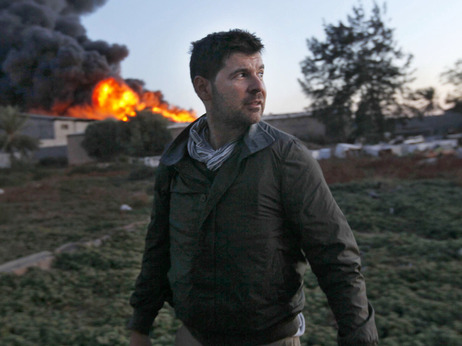
Getty Images photographer Chris Hondros stands in front of a burning building while on assignment on April 18, in Misrata, Libya. Hondros was killed in Misrata on April 20.
Getty Images via AP
  Getty Images photographer Chris Hondros stands in front of a burning building while on assignment on April 18, in Misrata, Libya. Hondros was killed in Misrata on April 20.

Photojournalists Chris Hondros and Tim Hetherington were killed by a mortar round in Misrata, Libya, on April 20. Fellow photographers Guy Martin and Michael Christopher Brown were also injured. Photojournalist Andrea Bruce shares her memories of Hondros.

People may not understand life in Iraq or Libya, but most know what its like to hurt. Or to lose someone they love. Crossing the language and cultural barriers of the world, photos point out the similarities of human nature. We have a visceral reaction when we see a little girl cry because her parents were shot in front of her. They are not just numbers or names. They are people. We want to reach inside the frame and help her.
This is what one of Chris Hondros' most unforgettable images from Iraq did for us. It shows a reality that was often reported, but rarely seen.

Samar Hassan, 5, screams after her parents were killed by U.S. soldiers with the 25th Infantry Division in a shooting in Tal Afar, Iraq, on Jan. 18, 2005. The troops fired on the Hassan family car when it unwittingly approached them during a patrol in the tense northern Iraqi town.
Chris Hondros/Getty Images
  Samar Hassan, 5, screams after her parents were killed by U.S. soldiers with the 25th Infantry Division in a shooting in Tal Afar, Iraq, on Jan. 18, 2005. The troops fired on the Hassan family car when it unwittingly approached them during a patrol in the tense northern Iraqi town.
Chris understood the power of photography as much as most governments do. The first thing banned in countries of conflict, the first thing targeted, are cameras. But Chris had an unflinching desire to tell the truth and an uncompromising need make people see the problems of the world.

He always remained strong. Unapologetic.

He went to great lengths to provide anyone who asked with all the advice needed to do this job safely and intelligently. Or, make you a mixed CD of classical music when you were down. Or, take the time to write you a two-page, well-researched email if he disagreed with you.

Chris was the glue of our photojournalism community — a community that has had a rough year. Many colleagues have been injured, kidnapped and killed. The void left by his, and Tim's, death will not only be a blow to news organizations and all of us who knew and admired them, but also to the people who live in Misrata — who are also being killed — with few people left to give them a voice.

Without Chris, Tim, and other photojournalists like them, the truth about the horrors of war can easily be hidden. Dismissed. Accepted.

April 20, 2011

Restrepo Director Tim Hetherington Killed in Libya

Rough news out of Libya today: Acclaimed war photographer and Oscar-nominated director Tim Hetherington was killed today during shelling in Misrata, reports the New York Times.

Hetherington is probably best known as co-director of the Afghan war documentary Restrepo. Two other photojournalists were seriously wounded: Getty's Chris Hondros and British citizen Guy Martin. Hetherington also produced pieces for ABC's Nightline about his Restrepo subject, the Korengal Valley.

An executive producer for the show recounts a story: "During shooting for the Nightline specials, he very seriously broke his leg on a night march out of a very isolated forward operating base that was under attack. He had the strength and character to walk for four hours through the night on his shattered ankle without complaint and under fire, enabling that whole team to reach safety."

April 14, 2011

Sean Penn Paparazzi Attack -- The Haiti Factor

The paparazzo who was attacked by Sean Penn in 2009 is donating all of the money he won in the court settlement to various charities -- including one cause very dear to Penn's heart ... Haiti.

TMZ has learned the terms of the settlement between Jordan Dawes and Penn reads, "All of the net proceeds of the settlement will be donated to charities that support victims of domestic violence and victims of the earthquake in Haiti."

We're told Dawes' powerhouse attorney, Donald Karpel, is also donating a large chunk of his attorney's fees to the charities as well.

As TMZ first reoprted, Penn got 36 months probation and was ordered to perform 300 hours of community service stemming from the attack.

April 6, 2011

Queen Silvia Of Sweden Injured While Escaping Paparazzi

Queen Silvia of Sweden was injured while trying to escape paparrazi in New York City on Tuesday.

Queen Silvia, wife of King Carl XVI Gustaf, was visiting New York to attend events connected to her World Childhood Foundation, which works to raise money for poor and impoverished children. She was accosted by a photographer from a Swedish tabloid while shopping on Madison Avenue with her youngest daughter, Princess Madeleine.

"It's not a question of her simply wanting to avoid being photographed. It's more akin to stalking," a Royal Court spokesman told the Expressen newspaper.

The photographer was reportedly waiting outside the front entrance where she and her daughter were shopping on Tuesday. The pair attempted to escape through a side door but the photographer chased after them, causing Queen Silvia to fall.

"Unfortunately, the Queen then fell, injuring both her foot and wrist," the statement said.

Jan Helin, the editor-in-chief of the Swedish tabloid the photographer was working for, says he will reflect on this incident to determine whether guidelines for reporting on the royal family need to be revised.

April 1, 2011

Historic meeting launches enforcement, new anti-paparazzi law

In January a private meeting occurred uniting prosecutors with law enforcement, private investigators, executive protection agents and attorneys for an intimate conversation. The media was barred.

The names of the people there could have comprised a Who’s Who in Los Angeles.

The select group gathered at the Marriott in downtown Los Angeles and looked at ways to enforce the new "anti-paparazzi" law AB 2479 that makes reckless driving acts, by those with a commercial purpose, a criminal act.

Sean Burke, the organizer of the meeting and founder of the Privacy Rights Initiative, formerly known as the Paparazzi Reform Initiative, described the atmosphere in Los Angeles as the Wild West. "It is like the gold rush before law and order arrived," says Burke. The Privacy Rights Initiative is a non-profit group of advocates and legislators for stronger laws.

“The knowledge and information that was exchanged within this group will be a direct contribution to many of the arrests made by peace officers, private investigators and executive protection agents,” says Jesse Martell, a private investigator and former Los Angeles police officer who may provide evidence of the criminal behavior at a future court date. “Every person who attended this meeting already had an understanding and concern of these reckless acts that have placed the public and the lives of celebrities in jeopardy.”

Called the PRI Paparazzi Roundtable, a few of the select group of 30 professionals who met to discuss strategies from gathering evidence to implementing it, included Andrew Wallet, attorney and co-conservator of Britney Spears' estate, William Hodgman, deputy district attorney, Matthew Schonbrun, deputy city attorney, Michael Dundas, deputy city attorney, Commander Kevin McCarthy, Los Angeles Police Department assistant commanding officer, Lt. Mark Rosen, Beverly Hills police traffic bureau commander, Sgt. Joe Jakl, traffic services detail with the Los Angeles County Sheriff's Department, Sgt. Bill Moulder, legislative unit with the Los Angeles County Sheriff's Department and officers Mel Flores, Jose Gutierrez and A. Bender from the California Highway Patrol.

“It was very productive,” says Barry Mozian, president, Talon Executive Services, a corporate security and private investigation firm.

“It’s the first time we were able to do something that hasn’t been done before with law enforcement coupled with prosecutors there to discuss these issues and really have a meeting of the minds with the ability to see each other’s faces, address what the concerns were and if they are concerns. This is not based on the whims and wants of a celebrity. It’s about privacy and public safety,” he says.

Burke, who helped draft the language of AB 2479, organized the Jan. 27, 2011 event for the exchange of information between parties who might not ordinarily get a chance to meet but who may be the most instrumental in the prosecution and conviction of paparazzi who break the new law.

“I’ve never seen anything like it,” says Burke. “I was impressed by the turn out, interest and sincerity. They all wanted to be there. It showed law enforcement and prosecutors really care. They were the highest ranking people along with some regular officers. It really dispelled that tired old notion about a government that doesn’t care.”

Burke says no one wants to see another death like Princess Diana and everyone knows it’s coming.

“It’s going to be a pedestrian,” he says. “Probably a mother and a daughter.” He says people showed up for the meeting to avert that death and all the car accidents, craziness and dangerous behavior.

Martell, private investigator, says, “This meeting symbolized a unity between government officials, law enforcement officers, private investigators and executive protection agents in an effort to stop the dangerous and reckless acts that have been committed by paparazzi. With strategies now in place, we are prepared to move forward in the apprehension and conviction of those who violate the new law.”

Meeting prompts strategy

Cmdr. Kevin McCarthy, Los Angeles Police Department, says the stronger the legislation gets the better to where taking a chance is no comparison to the reward. He says the laws up until now have been traffic violations. If you can take a picture of Jennifer Anniston getting out of her car in a skirt and sell it for $25,000, a $300 ticket for a traffic infraction isn’t going to deter someone from trying to get that photo.

The commander describes the PRI Paparazzi Roundtable as “a good conversation.” He says talking to members of private security quashed some of the things they (the police) thought were happening and security brought interesting comments.
McCarthy says regarding the prosecutors at the meeting, “They are big on this and proud of what they have, but they need a lot of evidence. It’s more the kind of evidence that security (and private investigators) can provide.”

Enforcement has been difficult without the videotape and eye witness accounts that private investigators and security may soon provide to law enforcement toward a conviction. For example, Los Angeles is a big city: Celebrities can pull over, call 911, but by the time police arrives there’s only a story and no paparazzi, says McCarthy.

“It is a public safety issue. Speeding, running lights, double parking, it’s a quality of life. It’s important to us. We have families that drive the same streets they (celebs) do.”

Sgt. Joe Jakl, Los Angeles County Sheriff’s Department, whose jurisdiction includes Malibu, Calabasas, Hidden Hills and other areas frequented by celebrities says, “It was a very good meeting. It was great getting all these players involved and creating communication between entities. The paparazzi will find their little loopholes in the new law and by having this dialogue we can find those loopholes.

“This is a public safety issue. It’s not only putting the celebrity in danger to get that million dollar shot. They are abandoning their cars in the street to get that shot. The paparazzi are very, very brave.”

He says also that part of the safety issue sometimes becomes the celebrities themselves: When they realize they are being pursued, they accelerate and it doubles the chances of something going terribly wrong.

AB 2479 and the meeting are a step in the right direction, he says, and a foot in the door to legislation that can still be improved.

Meanwhile, the sheriff’s department will respond to calls, dispatch a unit or have the caller come into the station if nearby.
Considered by some as the experts on paparazzi in California, Lt. Mark Rosen, traffic bureau commander, Beverly Hills Police Department, also spoke at the meeting and says it was very good, very productive and a good start.

“The paparazzi is an important and timely issue in Beverly Hills. We’re not targeting a specific (working) class. The paparazzi have the right to work, the right to earn a living and the celebrities need them for their careers. Any negativity at all revolves around public safety. We encounter paparazzi almost daily and it’s not always a negative contact.

Our job is not to get in between paparazzi and the celebrities. We look to are they conducting things in a lawful way, are they breaking any laws or threatening public safety?”

Rosen says AB 2479 is a new element and an enhancement to existing law. Unlike infractions, that require an officer witness a violation to enforce the law, AB 2479 gives celebrities and their security a chance to document a case after the incident and make a crime report.

“An infraction needs to be witnessed by an officer to make a report. A misdemeanor crime is subject to an arrest. A private person can make an arrest,” he says.

The Beverly Hill Police Department, meanwhile encourages pursued celebs to pull over and dial 911. The department will send someone or the celebrity can temporarily enter a safety zone at the department.

“We don’t want people getting into fights or high speed chases.”

Prosecutors seek slam dunk

Violations by the paparazzi may occur anywhere in Los Angeles. The roundtable discussion brought all of the folks into one room to brainstorm over the issues, says Matthew Schonbrun, deputy city attorney, Los Angeles City Attorney’s Office.
“It’s an issue everyone is concerned over. You think about the Princess Diana tragedy. It was horrible and tragic and could have been prevented. In a room full with a lot of big shots it all comes down to deterring behavior,” says Schonbrun.
Jeanine Percival Wright is a civil litigator in the Entertainment and Media group at Robins, Kaplan, Miller & Ciresi L.L.P. where she represents well-known celebrities and other talent in a wide variety of entertainment-industry disputes.

“They (the prosecutors) are looking for a good slam dunk case to set a good precedent,” she says.

Wright wanted to know what her clients and their private security could gather as evidence, such as videotape, to help their cases the most and also to learn her clients’ rights. She has clients who are frustrated by the paparazzi’s reckless driving. Wright wanted to ask prosecutors if the new law will be enforced and since there are heightened penalties when children are involved, would the prosecution seek the higher penalties for an expectant mother.

The city attorney’s office responds to public safety. “I take it seriously,” says Schonbron. “It’s going to require one or two successful prosecutions before it starts to have a deterrent effect. Law is written by lawyers and legislators but proving it to a jury I have to have enough evidence to pass their scrutiny. Once a violator is charged with a crime—if the goal is to prevent this type of crime then a judge and jury will help them avoid it.”

Deputy District Attorney William Hodgman, who declined comment, assured those present that the county will get a case and evaluate it, but prosecutors want something that is going to be rock solid, says Sgt. Jakl from the meeting.
Wright says it’s frustrating. She says that she believes many of the new paparazzi are not citizens, use fake names, false identification, and are hired as independent contractors. Many are known to be territorial, with a good number coming from Brazil and spending their free time practicing mixed martial arts. They are big, scary guys she says, who follow her clients incessantly, learning every intimate detail about their schedules, families, and friends—even their children’s pre-schools and nanny’s addresses.

She says the meeting was fantastic. “It was a historic representation of all the different law enforcement agencies. The City of Beverly Hills, Los Angeles, they don’t usually get to talk to each other.”

Andrew Wallet, co-conservator of Britney Spears’ estate, says he was very surprised at the gathering; Law enforcement recognizes there is a problem and it’s difficult to prosecute and convict.

Of his own experience with paparazzi he says, “We know who they are. We know who they work for. They are endangering the public and people we care about.

“They are thugs with cameras. We’ve seen them driving up on the sidewalk and almost hitting pedestrians or almost hitting other cars. We’ve seen them trespass, open doors and gates, and they hide under being the press. They are not the press.”
It is important that law enforcement is focused to do something, he says. There will be a case. There will be a prosecution and that will stop them.

“It’s unacceptable criminal behavior. No matter the celebrity, no one should be subject to that. Anyone in the public around doing these things they are doing—it’s a public concern.”

It’s not just weaving in and out of traffic, jumping onto curbs, or chasing celebrities at high rates of speed. Martell, owner of Martell Investigations, who works closely with Black Box Security, the agency that protects Spears, says Black Box captured video last year of a paparazzo using his right foot to steer his vehicle while he held a camera with both hands to photograph a celebrity.

March 31, 2011

Live Demo of Photoshop on the iPad


Adobe is working on a full version of Photoshop for the iPad for people who need more than the Photoshop Express app that’s more designed for mobile phones. At Photoshop World, which kicked off earlier this week, Adobe gave a neat demo of the app in action, and Eric Reagan over at Photography Bay recorded the video above. It’s a neat look at how they’re trying to rethink the popular program for a different kind of computer.

March 28, 2011

Sean Penn Settles Paparazzi Lawsuit

Sean Penn's paparazzi attack case is now over and out -- almost a year after Sean plead no contest to vandalism ... TMZ has learned Penn and the pap have settled the photog's civil suit.

Penn got 36 months probation and was ordered to perform 300 hours of community service stemming from an incident where he kicked a photog who was trying to film him.

The photog filed a civil suit, claiming he suffered a knee injury as a result of Penn's attack.

Both sides signed the settlement docs today. No word on how much Penn had to shell out.

March 25, 2011

Payola: Starring Lindsay Lohan and Co.

On the surface it seems the starlet making her coincidental rounds here in NYC is just that- a coincidence. But a careful examination of the rounds she has actually made and who was there to take the pictures may just show another side of this young woman’s descent in the popularity stakes. If one could apply the term smoke and mirrors- then this dears is the time to pull out a frothy glass of last weeks left over champagne and ask yourself- ‘How is it that these unemployed actresses manage to retain viability in a dog eat world?’

The answer in short: Payola. Or as they say in polite society (assuming such things still exist in your neck of the woods)- ‘orchestrated photo ops,’ staring your vixen of choice, the photographer agent (in our pressing case we present you startrakphotos), the vendor who pays off the vixen (in Lindsay’s case this weekend it was Bowlmor Lanes- you remember them, a bowling alley somewhere in your imagination) and the publications that then turn around and pay Albert Ferrara and Michael Simons (who orchestrates these deals) of Startraks his much needed pot of honey for the exclusive rights for all these ‘coincidental photo ops.’ Of course this would never have come to pass if it hadn’t been for Stephanie Simon, Michael Simon’s sister who happens to be a talent agent closely aligned to the Lohan camp.

In short it’s a wonderful illusion and one of the best kept secrets amongst media folks who like to turn a blind eye to such illegal behavior (illegal in the sense that it’s not reported as a staged coup d’etat but as news despite a 2009 Fair Trade Acts ruling governing endorsements and testimonials which has outlawed such egregious behavior) and have you the dear reader choking on your daily helping of celebrity gossip and nonsense. But then again, who doesn’t mind a bit of nonsense with your daily crumpet and this morning’s healthy serving of Champagne…?

It’s a Friday afternoon and out of the decks of lets have fun and go bowling adventures arises the visage of Lindsay Lohan and her brood circa 3 pm. The event itself was widely reported by the news outlets whose business it is to keep you attuned to the ongoings of your favorite media whore. So whilst the outlets came and rushed to take their shiny pictures (at a heavily guarded distance mind you) the real pictures were being taken inside the lanes by Startrak photos- the sole exclusive photo agency who somehow managed to be sitting miraculously on the corner scoop just in time for Lilo to walk by, give Albert Ferrara a high five and whisper deliciously in his ear- ‘do you feel like making a quick quid on the house- then follow me.’ 


The truth of the matter is: nothing about these pictures was coincidental. Nothing. Zilch. It was fabricated. Planned before Lindsay even got on the plane from Los Angeles and touched down in NYC for what her family likes to call her ‘let’s come to NYC and relax kissing out the window sessions.” To think the actress (well to be correct we ought to call her a reality actress as opposed to a film actress- from know on I will re christen Lilo- ‘Real Lilo’) just decided to rock up for a private game of bowling (the session by the way only lasted 40 minutes- funny, last time I went bowling- it took me a day and a half just to put on the bowling shoes) and lo and behold the ‘right press’ just happened to be there waiting for her at a moments notice ready to snap her cheery life away. While the ‘other press’ (the ones without the co opted money deals) were kept at a furious distance. Ho- hum…

READ THE ARTICLE HERE

March 23, 2011

How Elizabeth Taylor redefined celebrity

Elizabeth Taylor won two Oscars but many people remember her as much for her eight tumultuous marriages, ill health and addictions, all lived out in a way more public than any Hollywood star had done before.


Her life read like a script for many of today's Hollywood celebrities - she was a child star whose life was played out in the media, someone who was hounded by the paparazzi, had high profile relationships, and even battled drug addiction.


Elizabeth Taylor, who has died aged 79, in many ways defined the notion of modern day celebrity, someone whose life off-screen, as well as on, captivated millions.

"She was one of the first to really make her personal life as important as her professional life in terms of her stardom," says William Mann, a biographer of Taylor.

One of the main reasons was that her personal life had a gripping narrative of its own. Marrying eight times, twice to the same man, Elizabeth Taylor first went down the aisle at the age of 18. By the time she was 26 she was already a widow.

"People nowadays will do anything for maximum media exposure," says Mann, "but she got maximum media exposure because she lived a life that was fascinating to millions."

But what made her "fascinating" life accessible to millions of readers and viewers was in part the break-up of the old Hollywood studio system in the 1950s.

The end of a system which had allowed the big film companies to effectively control stars' pay and publicity, meant the studios could no longer hush up personal scandals for fear of damaging a star's reputation, says Mann.

"Up until then, the studios owned the artists and had unspoken agreements with celebrity magazines so they would tread lightly on people," says Karen Steinheimer, a sociologist at the University of Southern California, and author of Celebrity Culture and the American Dream.

Steinheimer believes that the decline of the studios' power, combined with Taylor's colourful personal life, created a new, more cutting, and less sycophantic style of mainstream media coverage of celebrities - moving towards today's tabloid press.

"Some of the coverage of her first marriage, her first divorce and her affairs, was strikingly more critical than the coverage of most other celebrities at the time," says Steinheimer.

"Looking back at some of the magazines from the early 1960s, you could be mistaken for thinking from the reports that she was the Britney Spears of her day in terms of the negativity and relentless hounding of her and her relationships."'Gotcha' moment

Taylor's romance with her Cleopatra co-star Richard Burton generated huge interest in the media, not only because their romance had transitioned from on-screen to off, but because they were both married to other people at the time.

"It was one of the first times you covered these kind of indiscretions on a large scale," says Dawnie Walton, deputy editor of Life magazine's website.

Taylor's face was regularly on the front of celebrity magazines. Life featured her as a cover girl no fewer than 14 times, more than any other person in the publication's history.

Walton says the turning point for the way Life magazine covered celebrity relationships began with the Burton/Taylor affair, and the candid on-set interviews with the couple were a precursor to the modern day Hello and OK!-style spreads.

Their affair, in the more conservative 1960s, was taboo to many, a landmark moment. In that sense, Steinheimer believes Taylor was the "first victim of the paparazzi".

Pictures of Taylor and Burton on a Mediterranean
yacht in 1962 became a worldwide news event

When Italian photographer Marcello Geppetti captured a picture of the pair frolicking on a yacht in the Mediterranean using a long telephoto lens, at the height of their affair, it became a worldwide news event.

Nowadays pictures of celebrities lounging around in bikinis on holiday are second nature in the tabloid press, but back in 1962, the shots were seen as shocking.

Steinheimer describes them as "one of the first 'gotcha' celebrity moments".

"The paparazzi wouldn't really exist today if it wasn't for them. The photographers got pictures of them going into clubs, they climbed up trees and looked down into her compound," says Mann.

"This might be standard behaviour for Hollywood today, but Elizabeth Taylor created that model," he adds.

Another model which many credit Taylor for is the role of the celebrity as a business entity.

She was the highest-paid actress of her time, negotiating a cool $1m for her role in Cleopatra, as well as a share of the profits for the film. This is now the model for many big stars.

But her business acumen extended beyond Hollywood.

By creating her own jewellery line and a successful perfume range, she became a pioneer in marketing a celebrity merchandise brand. Stars including Jennifer Lopez, Paris Hilton and Britney Spears all now have personal branded lines.

But Taylor will also be remembered for harnessing her star power to help good causes. In the 1980s, after her friend Rock Hudson died, she became one of the first celebrities to speak out about Aids.

"Hollywood took a lesson on that too, and every star now has their own personal cause and charity," says Mann.

While many of today's celebrities are famous for simply being famous, Taylor's essence was still the success of her screen work, argues Barry Adelman, executive producer of the Golden Globes awards show.

"She had the respect of her peers along with everything she was going through," says Adelman who worked with Taylor on a number of occasions.

"She was extraordinarily beautiful, and was considered a good actress. That's not true of a lot of celebrities that today's media are obsessed with."

March 22, 2011

NYT photog sexually assaulted and told 'You'll die tonight'

Sexually assaulted and told 'You'll die tonight'... but spared as she's American: Female journalist's horror at the hands of Gaddafi's men 

A female war photographer from the New York Times revealed tonight how she was repeatedly sexually assaulted during her nightmare hostage ordeal in Libya.

Lynsey Addario was one of four Times journalists have now been released after being held captive by pro-Gaddafi forces.

During their six-day detainment, the Americans were beaten and threatened with being decapitated and shot.

One man grabbed her breasts – the start of a pattern of sexual harassment she endured over the ensuing 48 hours.

‘There was a lot of groping,’ she said. ‘Every man who came in contact with us basically felt every inch of my body short of what was under my clothes.’

As she was being driven away from Ajdabiya, she said another of her captors stroked her head and told her repeatedly that she was going to be killed.

‘He was caressing my head in this sick way, this tender way, saying, "You’re going to die tonight. You’re going to die tonight",‘ she added.

Miss Addario was with Anthony Shadid, the paper’s Beirut bureau chief, photographer Tyler Hicks and reporter and videographer Stephen Farrell when they were seized while leaving the scene of fighting between rebels and Libyan government forces because they decided it had become too dangerous.

Their driver inadvertently drove into a checkpoint manned by troops loyal to the Libyan dictator.

‘I was yelling to the driver, "Keep driving! Don’t stop! Don’t stop!",' said Mr Hicks. ‘I knew that the consequences of being stopped would be very bad.’

As they were being forced out of their gold-coloured sedan, rebels opened fire sending them sprawling for safety.

‘You could see the bullets hitting the dirt,’ said Mr Shadid.

The soldiers forced them all to lie on the ground and they feared they were going to be murdered there and then.

‘I heard in Arabic, "Shoot them",’ said Mr Shadid. ‘And we all thought it was over.’ But then they heard another soldier say: ‘No, they’re Americans. We can’t shoot them.’

The fate of the car driver, Mohamed Shaglouf, is unknown.

The prisoners were tied up using wire, an electrical cord, a scarf and even a pair of laces and bundled into a car that drove them away from the city.

Each time they stopped at a checkpoint, soldiers would punch them or hit them with rifle butts, according to the Times report.

The first night they spent in the back of the vehicle and for the second they were put in a dirty cell with a bottle to urinate in and a jug of water to drink.

On the third day, they were blindfolded and put on a plane to Tripoli, where they were held in reasonable comfort in a safe house until their eventual release this morning.

After Libyan demands for a U.S. diplomat to be sent to Tripoli to collect the journalist was rebuffed, the Turkish Embassy was allowed to act as an intermediary.

Even then there was an agonizing last minute hitch when the planned release on Sunday was postponed because of the coalition bombing.

After the four were safely out of Libya, Bill Keller, the executive editor of the Times, said he was ‘overjoyed’ at the news.

‘Because of the volatile situation in Libya, we’ve kept our enthusiasm and comments in check until they were out of the country, but now feels like a moment for celebration,’ he wrote in a note to the newsroom.

‘We’re particularly indebted to the government of Turkey, which intervened on our behalf to oversee the release of our journalists and bring them to Tunisia,’ Mr Keller added.

‘We were also assisted throughout the week by diplomats from the United States and United Kingdom.’

Thirteen journalists are still said to be either missing in Libya or in government custody.

They include four from the Al Jazeera Arab TV network, two from Agence France-Presse news agency and a photographer from Getty Images. Six Libyan journalists are also unaccounted for.

Last month, South African journalist Lara Logan, Chief Foreign Correspondent for CBS, was also sexually abused while covering scenes of celebration in Cairo's Tahrir Square.

Miss Logan was surrounded and suffered a brutal and sustained sexual assault before being saved by a group of women and Egyptian soldiers.

The mother-of-two needed hospital treatment on her return to the US.


March 15, 2011

Lindsay Lohan Tweets About Paparazzi Giving Her an Anxiety Attack

Looks like the pressure is starting to get to Lindsay Lohan. On Sunday, the actress -- who still faces the threat of jail time for her alleged shoplifting -- took a plane from L.A. to visit her family back in New York. Unsurprisingly, the paparazzi were lying in wait at JFK International Airport -- but the 24-year-old admits that she freaked when the flashbulbs went off.

"I love ny - but the paparazzi @ jfk just gave me an anxiety attack," Lohan wrote on her Twitter account. "I was half asleep! they're such animals :( well- @ least im with my family in the end.... xo"

March 9, 2011

Dear photographers, Lady Gaga wants the copyright on your work

Lady Gaga is demanding that some photographers transfer all their copyrights to images they make of her as a condition for photographing her concerts, according to TBD, a local news site serving the Washington, DC area.

The site says Jay Westcott, a TBD photographer covering a Lady Gaga concert last week, was presented with a “Photo Release Form” requiring him to transfer copyrights to his concert shots to the star. Westcott called TBD’s offices for a consultation, and TBD editors told him not to sign the agreement and not to shoot the concert.

In its report about the incident, TBD surveyed other photographers, editors, and trade groups (including ASMP) about such copyright transfer demands. The upshot of the story is that for some time now, a few rock megastars–but certainly not all–have demanded copyright transfers from concert photographers because, well, they can.

As TBD notes, the terms on Lady Gaga’s transfer form “are the sort of strict stuff you expect from stars who know darn well that media organizations need them way more than they need media organizations.”

MILEY CYRUS SEEING RED WITH THE PAPARAZZI

After Miley Cyrus spent the weekend in New York doing the US showbiz rounds with many late night shows such as Saturday Night Live, Miley Cyrus has flown back to LA this week and has already caused some controversy by dying her hair red and having an apparent altercation with the paps.

Recent photos of her released yesterday show Miley popping out for some sushi on Monday with her brother, sporting some rather long red hair. More than happy to show off her new wild hair for the camera's, Miley was not so keen to be papped yesterday as she sported a rather clingy pair of Lycra leggings and trainers as she left a cafe in Toluca Lake yesterday. The 18 year old was photographed apparently trying to grab the paparazzi's camera and giving him a good finger wagging and a telling off!

Bradley Cooper Not Bothered About Paparazzi

Bradley Cooper doesn’t let the paparazzi get to him.

The actor — who’s currently dating actress Renee Zellweger — says he’s happy to be stalked by photographers because being famous means he makes lots of money!

“Being a part of a movie that’s so financially lucrative provides opportunities,” Cooper told Parade magazine.

“And with that coes a higher profile, so you have paparazzi. That was a new thing. You just have to learn to navigate through it all. I still feel I can live a very normal life. For some reason, this past month in LA, there was no problem with paparazzi. You definitely get someone who will recognize you, but that’s nice.”

Cooper then revealed how dealt with sudden fame after The Hangover.

“By then I was 34, and I had already figured out enough to know that if I was going to invest anything in that, then I’m looking for some serious trouble,” he said.

“Now, if that happened to me when I was 23, I probably would have gotten into some trouble. There’s no power in fame at all. If anything, you give up your power. It’s a creation of something that’s completely frivolous and it goes away like that. You never own any of it. All you can do is your work. It’s always been clear to me. I just want to get better and work with great actors and directors. The rest you just have to deal with.”

March 7, 2011

Reuters to distribute ‘paparazzi-type footage’


Reuters says distributing Hollywood TV’s footage of celebrities serves “a crucial role for entertainment programming needs” and complements the celebrity and entertainment coverage currently offered by Reuters. The release is after the jump.

Reuters release
Reuters announced today that it will distribute Hollywood.TV content and footage to their 700+ service users around the world.
Reuters will distribute Hollywood TV’s paparazzi-style footage of celebrities, serving a crucial role for entertainment programming needs and complementing the celebrity and entertainment coverage currently offered by Reuters. The deal further enhances the Reuters America service offering, available via Reuters newly launched unified content platform.
Hollywood.TV is the definitive source for compelling celebrity footage in Southern California and beyond. Their access into the daily lives of stars in Hollywood makes their video indispensable for entertainment and news programming. Hollywood.TV’s team of videographers get the images that will be tomorrow’s breaking news. Hollywood.TV content will become available through Reuters from March 4th.
This announcement follows Reuters agreement earlier this year with the Chinese broadcaster CCTV to distribute their content and scripted footage globally.

March 4, 2011

Bill Would Ban Photos At Accident Scenes


SPRINGFIELD, Ill. (WBBM) – A state lawmaker doesn’t want drivers to stop and take pictures or videos of vehicle accidents.
As WBBM Newsradio 780’s Alex Degman reports, a measure to ban that practice has passed an Illinois House committee.
The bill’s sponsor, state Rep. Tom Holbrook (D-Belleville), says amateur photographers often get in the way of emergency personnel.
“Putting your cell phone over the firemen’s shoulders as he’s using the jaws of life, maybe to get your grandmother of the front seat of her car while she’s bleeding,” Holbrook said. “You never know with these things. These are horrendous situations for individuals.”
Holbrook says accident victims would still be able to take pictures for insurance purposes.
But the bill says no person may use a wireless device within 500 feet of an accident, except for specified purposes.

March 2, 2011

Justin Bieber Flips Off Paparazzi

Justin Bieber and Selena Gomez's relationship has caused one heck of a media frenzy to get photos of the lovebird snuggling. It also seems that just after two short days of being public lovers, that the couple are feeling the strain of being thrust in the spotlight.

The incident went down reportedly after Justin and Selena's birthday dinner out at Maggiano's. The newly crowned 17-year-old attempted to drive himself and his love away from the numerous photographers when one photographer got up close to the car window and Justin apparently snapped. The photo that resulted from the incident is one of Selena hiding her face through the car's window and an irritated Justin giving the one finger salute!

This photo really has made many Belibers stop to think just who their boy idol is. Has Justin changed from the calm, laid back sweet boy? Has he always been a vulgar boy but hidden it well? Was he pushed too far? Lastly, is he a good role model?

While any of the above could be true or partially true, it's known that stars do not think kindly of their space being invaded. Perhaps the paparazzi photographer was in the wrong to get so close to the car, but isn't the same true for Justin? His behavior will be seen around the world by many fans and parents. This includes many parents who fund his young fan's love of him and make him money.

It's currently unknown what effect, if any, this photo will have on his career. However, it's probably a good idea for the couple not to dine in a very public and well-known eatery in LA. Maybe next time ordering in or getting room service would be a far wiser choice.


UPDATE: Bieber has Tweeted the following apology:
“had a great bday and at the end of the night we got surrounded by paps and i reacted in a way i know better. im sorry... it’s not always easy but i know better than to react in anger.”

February 28, 2011

Catherine Zeta-Jones hurt in clash with paparazzi

CATHERINE ZETA-JONES and Michael Douglas were in a scuffle with the paparazzi just hours after the Swansea-born star collected a CBE from Prince Charles at Buckingham Palace.

Video footage of the incident, which emerged over the weekend, shows the aftermath of a media scrum which began when Zeta-Jones and her husband were chauffeured back to their Westminster hotel in London after a dinner with friends at Gordon Ramsay’s Claridge’s hotel restaurant.

The 41-year-old had earlier attended a ceremony at Buckingham Palace with the couple’s two children, Dylan, 10, and Carys, seven.

The pair are filmed trying to make their way through a group of photographers and Zeta-Jones can be heard shouting: “How dare you punch me.”

She is seen clutching her chin and lip and demands: “I want a police officer right now. He punched me. The guy coming in here, he punched me.”

In the footage, which is already racking up thousands of hits on video sharing websites, Michael Douglas is then seen to his help his wife before hotel security intervened in the incident.

Douglas recently declared he had won a well-publicised battle with throat cancer but still requires monthly checks.

Speaking afterwards, a representative for Douglas said: “You saw it for yourself. Otherwise, the trip and the ceremony were fabulous and such a joy for everyone.”

Thursday’s scuffle is the latest in a string of clashes between Zeta-Jones and the paparazzi.

In 2003 the couple won a landmark court ruling after claiming that a photographer who sneaked into their wedding had invaded their privacy.

During the case Catherine told the court how she was once scared by a photographer who jumped out of a doorway at night to get a shot of her.

On another occasion, she crashed her car into a lamppost trying to escape from a photographer.

Later, Zeta-Jones was driving her son in California when photographers for a British tabloid paper crashed into them.

Under Californian law, drivers have to get out of the car to exchange details.

She told London’s High Court at the time: “They immediately jumped out of their car and took photographs of me looking furious at the side of the road.

“They then published them in an article about me being consumed by road rage.

“This incident made me very angry.”

Publicist Max Clifford said each case of paparazzi intrusion should be judged separately.

“I’m sure that in some cases a line has been crossed and in others the star is being a little precious,” he said.

“In this latest case with Catherine, only she and the people involved know exactly what took place.”

He added: “The thing I tell all the stars that I have represented is that they must expect and put up with a degree of it. Of course the days when the paparazzi played the game are long gone, in fact these days anyone with a camera or even a mobile phone is a member of the paparazzi.

“It has got harder for people to live with and I sympathise with that, but of course there are certainly cases where the celebrity is being a little precious.”

A spokesman for London’s Metropolitan Police said there had been no complaint and no investigation was taking place.

February 27, 2011

Prince Harry's car hits royal photographer

PRINCE Harry's minders face a grilling after a car carrying the young royal hit a photographer in central London, leaving him hospitalised.

The snapper was struck as the Prince was whisked through a press pack in a silver Ford car in the early hours of this morning.

Party-loving Harry had been celebrating England's Six-Nations rugby success at central London's Beaufort House before calling it a night around 2am and climbing into the vehicle with his protection team.

The prince was heading to his car with his minders. With Harry safely inside, the car pulled into the street hitting Mr Margiocchi in the leg and knocking him to the the ground.